Thursday, June 16, 2016

Guns

The United States is unique among developed nations in that it regards the possession of firearms a civil liberty, an idea that dates back to the American Revolution were armed citizenry rebelled against unjust British rule, and has more guns per capita than any other nation on the planet. American citizens later have used firearms to protect themselves, their families, their property, and their rights. The right to bear arms has been upheld in court repeatedly and it is insane to believe that all of America’s 300 million privately owned guns will be confiscated and destroyed. 

The United States also carries the burden of the right to bear arms. This has led to America having an exceptionally high homicide rate and is susceptible to mass shootings. There are many reasons behind the bloodshed ranging from the failed drug war to systemic poverty to mental illness to terrorism. To debate on the right to bear arms and this violence usually leads to views that ignore many of the underlying causes and polarizes the debate so that compromises become less likely. When measures are passed to try to reduce violence they usually are meaningless like bans on collapsible buttstocks or imported firearms or shoestrings. Of late, the idea of banning certain individuals from buying guns based on those individuals being on a secret government list and ignoring due process has become popular idea as well. 

It should be theoretically possible to protect the second amendment, reduce overall gun regulation, protect due process, and minimize gun violence. Smarter and simpler regulations and policies addressing the reasons behind much of the violence in America sounds like something that everyone should support but can’t agree on what the regulations should be and what policies to you enact to reduce violence. Here’s my policies that don’t focus on gun regulation, but would help in reducing gun violence:

  • Non-interventionist foreign policy combined with a less of a surveillance state as explained here
  • The end of the drug war and the criminalization of drug use with reforms to current drug patent laws to make needed medications more affordable, I'll try to address intellectual property stuff in the future. 

These 3 overarching policies would lessen stress brought by financial insecurity, decrease the threat of Islamic terrorism, and would stop the black market for drugs that fuels a large percentage of violence in America as well as other nations such as Mexico. It’s also worthy of noting that the a large proportion of gun violence occurs in certain neighborhood hotspots that can be targeted by police.  

For actual law on guns, I think dividing guns into two categories based on their action. You’ll have manual and automatic. Manual action guns would include revolvers, bolt-action rifles, pump-action shotguns, and other such guns. Automatic action guns would include things like a Colt 1911 or an AR-15. 

Now sales of manual action weapons should be easy and quick for adults who need a firearm. Revolvers, shotguns, and bolt-action rifles can provide security, home defense, and hunting services adequately. Sales of automatic action firearms should have a delay of 2 weeks as a federal policy. Mass shootings are primarily carried out by pistols with an automatic action and rifles with an automatic action being behind them. Revolvers and shotguns have been used in mass shootings, but fatalities are usually less than those in other incidents. You could also reduce the needless regulations on guns and gun accessories in the process. 


This 2 week delay would accomplish two things, first is to stop the spur of the moment person from buying a high capacity firearm and second for allowing local authorities to conduct an analysis of the purchaser. If local authorities are suspect that a certain individual of nefarious activities they can look into the matter and should be able to attain a warrant if needed. 


Now gun safety courses as a requirement for gun ownership are an idea that is worth exploring as well. At a federal level this has the capacity of devaluing the second amendment and the right to bear arms. At the state and local level the concept of gun training is more viable. Training courses would help in reducing accidents and would reduce the likelihood of a gun being stolen or taken by a relative or an acquaintance which are the major sources of guns of criminals outside the drug war driven black market. Local communities can decide wether these courses are needed or not by themselves and can decide what exactly is taught in the courses. 

There, I solved the gun debate. 

Wednesday, May 25, 2016

Death & Taxes, but Mostly Taxes

Taxes are an annoying and tendentious, yet they are ultimately needed to run government as we know it. However, as most Americans seemingly believe, our current tax system is broken. There has to be better alternatives right? I mean nearly every presidential candidate has proposed some sort of tax reform (that is pretty meaningless because congress ultimately levies and collects taxes per the Constitution), so are/were any of their ideas good? Without going into details, nope. 

I think there is a pretty revolutionary system of taxation that can help accomplish a plethora of societal ills from economic disincentives from progressive income and corporate taxes, disincentives to build from property taxes, suppressed wages from payroll taxes, economic inequality, urban revitalization, and urban sprawl. 

Sounds crazy, but this is the sales pitch for the Land Value Tax (LVT), a tax theorized by capitalism’s forefathers such as Adam Smith and David Ricardo and later popularized for a short time by economist/social critic Henry George in his book, Progress and Poverty. It’s a variant of a property tax that just taxes the value of a plot’s unimproved value. In other terms, the tax doesn’t factor in buildings and other improvements and rather just taxes the land. 

So in theory the LVT does not “punish” people who make investments onto their own property or those who make more income. If someone doubles their income, but the value of their land stays the same then their taxes do not increase. However, the LVT is widely regarded as a measure to fight economic inequality, as its tax burden falls mostly upon the richest in society as they tend to own much more land on average and more land in prime locations. Unlike a progressive income tax, an LVT almost impossible to avoid through overseas tax havens by the rich and powerful such as the ones exposed recently with the Panama Papers. This sorta means that the LVT combines conservative and liberal tax ideals of promoting growth and having the most well-off pay the their share. Or at least something like that. I don’t know what cons and libs really want with taxes. They don’t really make sense most of the time so its hard to know what they want. 

Suboptimal land use is another issue that the LVT tries to tackle. In urban areas, vacant lots and low-income areas would be built up and revitalized. Vacant lots would be a drain to the owners and would likely want to either develop the lot or sell it to someone who would, this would improve the area’s overall wealth. In lower income areas, lower tax rates for land would incentivize businesses to move into the area and in theory hire local workers and thus spurring growth. This would also occur in other lower income regions around the US, such as the rust-belt which has a much reduced land value per acre than the rest of the US. With the elimination of corporate taxes in the US and the implementation of an LVT would likely bring companies into the United States and in the regions that need them the most without costly regulations and harmful protectionist policies.

Optimal use of urban areas would also lead to more high density residential areas and would cut back on urban sprawl. Urban sprawl is a major source of habitat destruction in America, and cutting back on sprawl would enlarge and protect America’s countrysides and wildlife. Another benefit of this reduction in sprawl would mean a reduction in distances needed to travel and an increased use on mass transit, which would lead to a reduced use in fossil fuels for transportation. Pollution in general though would decrease land values and provide an an incentive to pollute, to combat this Pigouvian taxes are likely needed in conjunction with an LVT. 

Land values also seem to be a realistic tax base as well, as the overall value of privately owned land in the lower 48 seems to be greater than the GDP by a decent degree, and that’s without Hawaiian beachfront resorts and Alaskan oil fields. A 15-20% LVT should be enough to completely replace all current federal taxes. Errors in land value assessments don't seem to be too much of a problem in relation with modern property taxes either, and assessments should get more accurate overtime with better analytics being developed all the time. Applications of the LVT and similar taxes in localities in Australia, Denmark, and Pennsylvania and elsewhere have been on the large part beneficial to those communities. Removal of zoning laws, similar to Houston's zoning laws, may also be needed to fully take advantage of an LVT. 

This is before the big oil boom in North Dakota too. 

There could be some legitimate arguments around the feasibility of such as system wouldn’t work or not work as well as LVT proponents suggest, but I’ve never found anything to convince me that the reforming the tax system to be based off of an LVT would be bad. And I’ve looked. A lot. Probably for too long to be honest. I guess people who live in fancy mansions that have no income and golf courses would be the ultimate losers of an LVT, but I’ll assume that the mansion dwelling recluses aren’t a big portion of the population. I also don’t like golf. It's boring. 


The LVT was once a widely known and popular idea with supporters from a wide variety of political leanings around the turn of the 20th century. It slowly faded out of the public conscious after WWII though and today the idea of an LVT is fairly obscure. I don’t seem why this has to be the case though as it is just as relevant today as it was during the time of Henry George. I'm realistic though, and that's why this is on a blog that has a severely small viewership and not on a letter to our congressmen. 

Thursday, May 5, 2016

Reforming Welfare?

America's welfare system is broken. Around 14 or 15% of Americans are currently in poverty, and that's not too different from when LBJ started his "war on poverty in the 1960s. It's sorta safe to say that LBJ's war plans against poverty were no better than his plans against the Viet Cong. Many more Americans, around half, are living with incomes under $30,000 a year.

What would happen if we just clumped the entire transfer payment system (Welfare, Social Security, Medicare, Medicaid, etc.) into just one program? Specifically a negative income tax (NIT). A NIT is what it sounds like, its a payment for those making under a certain amount of income based on a percentage of their income that is beneath that certain amount. It's sorta like the current earned income tax credit (which already is pretty effective), but it also creates a lower limit which creates a guaranteed basic income for those that don't have any income at all.

So here's a basic formula where the basic income would be $15,000 and payments would be provided until one makes $30,000 at a 50% NIT.

30,000 - Income = X
Income + (X * .5)

Under this formula:
A person making $0 will receive $15k.
A person making $5k will receive $12.5k ($17.5k in total). 
A person making $15k will receive $7.5k ($22.5k in total). 
A person making $29k will receive $500 ($29.5k in total).

What this does is it eliminates welfare cliffs that litter the current welfare system and create disincentives to work. In a NIT, the more money you earn, the more overall money one has in one's pocket. 

Another reason to like the NIT is that it promotes individual decisions in how welfare recipients spend their money. If they decide to invest it or start a business they can do so. If they decide to spend it frivolously, they can do that too. We should treat adults like adults and let them make their own decisions about how to spend the money. Why should the government act as a nanny over the lives of millions of people? It shouldn't. 
Economist Milton Friedman on the NIT

Now is the above $15k guaranteed income with a 50% NIT plausible? Well, I think it is a little optimistic, but the gross spending on federal, state, and local levels on welfare, health, social security, and pensions is currently ~$2.9 trillion. If you divide that by ~190 million, a generous approx. size of America's <$ 30k income earners and unemployed, you'll get ~ $15k per person which is the worse case scenario where no one has an income. So it's theoretically possible without actually raising taxes, but this doesn't take into account a ton of factors from child tax credits, health issues, and differences in state poverty levels so it is a rough assessment. 

One could come up with a slightly more complex way to distribute the funds of an NIT with regards to the complexities of the real world and could probably do so in a way that saves a bunch of money, with "bunch" being equivalent to billions. I'm not that person though. 

There are problems with the NIT in regards to fraud and a lessened incentive to work, but the current system already has these problems and likely in a more severe degree thanks to those welfare cliffs and the sheer number of programs currently in existence. 

I think it is obvious that an NIT is a superior way to fight poverty in combination with other reforms such as tax reform to lessen the burden on America's middle class and to promote private sector growth. If one thinks reform is needed to America's welfare system, then the NIT should be something to look at for a comprehensive bipartisan welfare reform. Too bad no political party of particular note supports the the idea. 

Wednesday, April 27, 2016

Terror and Liberty

America's civil liberties is part of what made our country unique when it broke off from the British Crown. They are the Enlightenment ideals that have been written down in our Constitution which sets the limits on governmental control over our lives. However, they seem to have been eroded away over time and this process seems to have kicked into overdrive whenever America is engaged in a conflict. The suspension of habeas corpus during the Civil War (Jefferson Davis did this too), the destruction of German America during WWI, and the internment of Japanese Americans during WWII are all examples of gross overreach of government power over its citizens that turned out to be rather useless and embarrassing in the long term. Since 9/11, this urge to curtail civil liberties has popped-up again, and this time it might be worse than useless with the Patriot Act, NDA Act, mass surveillance of all Americans, torture, targeted assassinations, suspension of habeas corpus and all that jazz. You might say the Constitution may not ably to terrorists, but I disagree with this premise, as if the Constitution is the document that espouses what America stands for then why ever would you discard? Meanwhile, the erosion of civil liberties in America itself, and elsewhere, may actually be contributing negatively to the prolonged War on Terror instead of being a tool of actual counter-terrorism.
"Those who would give up essential Liberty, to purchase a little temporary Safety, deserve neither Liberty nor Safety." 

Has America's efforts to protect us, its citizens, actually improved our safety? Well, its sorta ambiguous. America's security and intelligence apparatus has had successes in foiling some terror plots every now and then, but it is not effective. Also, many examples of foiling terrorists actually seems to be "honey-potting" certain individuals into supporting something they actually don't. In the meantime, the Bill of Rights is being abused by our government. You may not care about your rights, and that's fine I guess, but you are giving the government more control over how you think and act by doing so. Who is to say that the next government doesn't like the way that you act and considers you dangerous? Are you affiliated with "Black Lives Matter" or the "Tea Party," if so you've already been labeled a terrorist by somebody. I can realistically see both potential left and right wing American governments that would try to use these measures of suppressing the Bill of Rights by outlawing certain types of speech, searching through the records of their opponents, or even arresting opponents due to their ideas. I don't think a dystopian America is a likely conclusion though, even if a radical politician takes the Oval Office, but it is a possibility and that is why its important. *


So why do I think these violations of our civil liberties are causing more terrorism? Well, it is because when the American Government commits extrajudicial acts it gives fuel to their ideology. By killing people off the battlefield through assassinations, committing acts of torture, killing tens thousands of civilians, or suppressing their right to have their idiotic and backwards beliefs, we become almost no better than they. Or at least in theory as I think America is still, by and large, the "good guy." This is hard to accept as America makes these mistakes when our most atrocious acts relating to the Middle East interventions may not come close to the atrocities of al-Qaeda, ISIS, or whatever Salafist Jihadist organization we are fighting next, but it needs to be accepted. From the viewpoint of many people living in the Middle East, that are largely ignorant of terrorist attacks against the West, see it as almost the opposite. We end up creating more terrorists by the end of the day, and this is partially responsible why the number of Salafi Jihadists has increase ~10-fold since the 1980s. In order to win we must play by our own rules, that is how we will win the "hearts and minds" of people in the region by following a "superior" code of law. It is by fighting the just fight, even if it is harder than before, as it is the right way to conduct ourselves in both domestic and abroad. We can't afford to "act tough" when we know that this isn't an episode of 24 or a Tom Clancy novel, this is the real world which is more complex than "find the bad guys, stop the bad guys, kill the bad guys."


Why do I think this will work? Am I giving in to the demands of terrorists by tolerating their beliefs in a society? Can America and its allies continue to operate the way it has been while fighting the good fight? Well, I do think this strategy would work even though it may come with its own set of challenges. I also think that accepting some forms of Islamism needs to occur, maybe not immediately but at least overtime. This doesn't mean that the US Government should start adopting Sharia, as that is diametrically opposed to the 1st amendment. What this means is that voices calling for Sharia (or honestly anything, in my opinion) should be free to do so without worry that their beliefs will make them end up being needlessly tortured in jail cell. Can America actually start negotiating with terrorists, as Gen. David Petraeus wants to do? Maybe. I am honestly not worried about the ideas of Islamic extremism being promoted in a free society, as their ideas kinda suck and only a few people buy into it. We can then focus on finding those who are carrying out violent acts that hurt others and rely on goodwill and targeted surveillance on certain individuals to prevent larger attacks instead of forcing Muslim communities to be spied on at large, which is actually counterproductive. Get the government out of people's lives.


This isn't a new idea, as I'm fairly sure this idea is at least 225 years old. America today is already fairly open to a wide range of groups that have engaged in terrorism in the past and we've seem to be fine with now. Can the same sort of historical trend be true of Islamic fundamentalists? I don't see why not today's Islamic extremists can become tomorrow's Irish republicans or Basque separatists. Of course more things need to occur to stunt the growth of terrorism, and some comes from America's foreign policy decisions which can spur terrorism. America's wars need to come to a close and stop our support for tyrants, such as the Saudi royal family, needs to come to an end. This does not mean we should stop killing terrorists when need be, we should. We just need to do it better, if that is possible.


Building trust with Islamic communities through trade and personal voluntary connections should be the basis of America's future with our own Muslim communities and the Sunni Islamic World abroad. The fight against groups like ISIS and Boko Haram should continue, but we should focus our power in a more clean and just manner than it is currently. Will that be the case and will the constraints on our civil liberties be lifted? Not likely, as a good chunk of the American populace along with most politicians disagree with abiding by Constitutional restraints, not committing torture, and not going to war. I can dream right? I'm just an overly idealistic college student, so if this seems overly idealistic it probably is. Although I'm in company with Benjamin Franklin, which is good company in my opinion.


*There's other reasons why rights are important, but that's a brief explanation. As is this whole post on terrorism, civil liberties, national security, foreign policy, etc.

Sunday, April 24, 2016

Turkey Behaving Badly

Turkey and its president, Recep Erdogan, has been in the news lately for seeking legal actions against European comedians and journalists that dare insult Erdogan. This violation of the freedom of speech is nothing new for Turkey and Erdogan who are increasingly cracking down on political dissenters at home. Thankfully, in America you can criticize and mock anyone you want, regardless of what certain fools would like to do.

2-year jail sentence in Turkey

Turkey has also stepped up its efforts to deny the Armenian Genocide that happened during final days of the Ottoman Empire nearly 100 years ago. Keeping with the trend of violent repression and denial, we can look at the current Turkish effort to "pacify" its southeastern Kurdish regions, which looks almost no different from the efforts of Bashar al-Assad's violent campaign against his own people. Turkey has been a major player in calling for the removal of Assad, but in the process has allowed ISIS to expand upon its borders, escalate tensions with Russia, and attacks US-aligned Kurdish fighters. Turkey also has an Ultra-Nationalist party, the MHP (which thinks Erdogan is actually too soft), that is connected to the Grey Wolves terrorist organization which commits atrocities against Kurds, liberal Turks, Chinese people, and even Thai civilians.

America might want to reanalyze its partnership with Turkey in the future, as it is an important strategic ally in the region and is a large growing economy. However it is behaving badly and just maybe we need to put its NATO membership on probation. Turkey isn't quite the lost cause that Saudi Arabia is and Turkey's leadership has shown to be competent at times, yet it may be time for some serious pressuring to put Turkey back on track to being a regional power for stability and democracy instead of a nationalist authoritarian state that's picking fights with its neighbors and its own citizens.

"You're causing more problems for me, and your protection." - US SS agent to Turkish Presidential Bodyguard

The Saudi Problem

Saudi Arabia is a terrible country that invades its neighbors, represses human rights, and spreads an extremist ideology, known as Wahhabism, that helps drive the majority of Sunni Jihadism today. Yet the United States and our European allies continue to moderately support this outright criminal state and out economy is still reliant on Saudi Arabian oil which has recently flooded the market and has caused many American oil companies to go bankrupt which are causing oil boom states such as North Dakota and Oklahoma to head towards recession.
Arm Sales to Saudi Arabia
Other concerns arise from Saudi Arabia from their proxy war with Iran which could lead to even more widespread conflict in the Middle East, that would likely drag America back into a new ground war, to their alleged role in the 9/11 attacks, which may be revealed in the coming weeks.

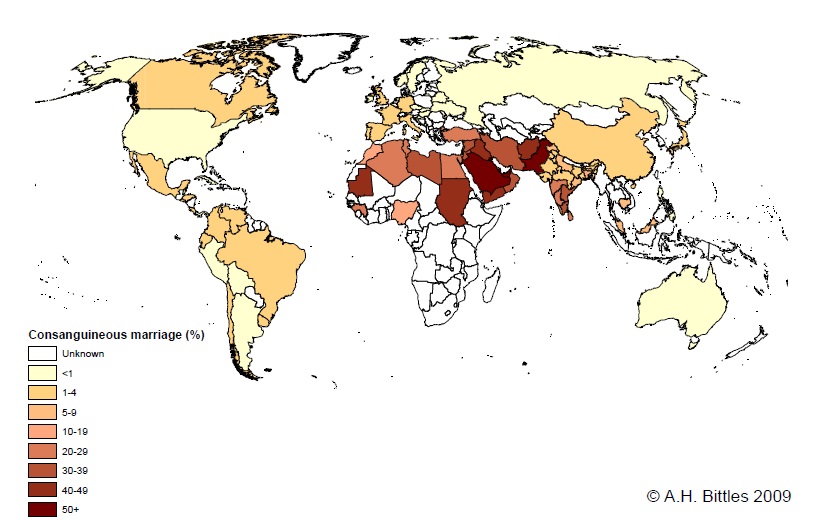
There are more reasons why Saudi Arabia is a terrible place such as this:
World's Leader in Incest!
There seems to be some minimal progress from the Obama administration in reducing our ties with the Saudis, and most of the 2016 candidates seem to be anti-Saudi. Unfortunately that doesn't mean the candidate most likely to win doesn't support the Saudis though, quite the opposite.

The Saudis will reap what they sow in one form or another. Their thing for incest already has them near the top in the rates for birth defects for one thing. Their war in Yemen against the Houthis has been a failure so far by all measure. The Saudi state itself is at an increasing risk of upheaval and political strife, such as seen in Egypt and Syria could be around the corner. Even their flooding of the oil market to kill competition has made their own economy both non-diverse and unstable which could lead to their own economy collapsing. Their oil profits might also come back to bite in the form of increased temperatures over 140 degrees Fahrenheit due to anthropogenic climate change in the region which would be pretty intolerable for human life. 

Why wait for the inevitable though? So do we end arm sales, embargo Saudi oil, end all military assistance, or even cut ties altogether? Cutting ties goes too far in my opinion as American foreign relations need to be bilateral with all nations, even with nations that don't see eye-to-eye, especially with nations that don't see eye-to-eye. However I do believe the end of arm sales and military cooperation with the Saudis can and should end without major consequences. The harder thing to do for America is to embargo Saudi oil as the American economy is still somewhat reliant on oil prices. Yet it is probably the best thing for America in the longterm, not only by strengthening America's energy independence and cutting funds to the Wahhabi fundamentalists (aka terrorists), but by giving America bargaining chips if Saudi Arabia reforms out of the backwards totalitarian petro-state that it is currently into something that is at least not despicable.